
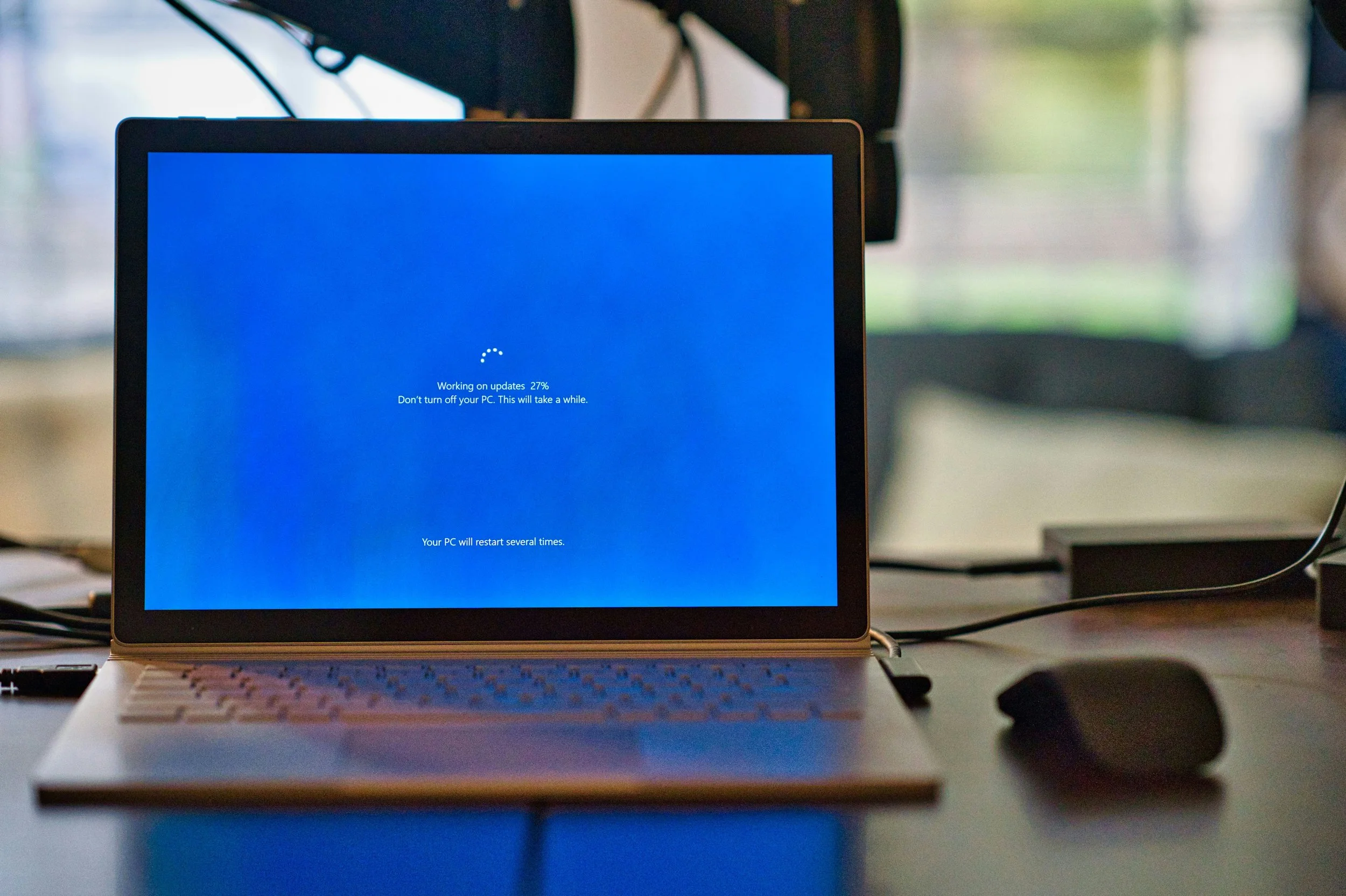
I have heard some truly ridiculous stories in my 27 years working in the administrative profession, but one that continues to surprise me is the absolutely terrible technology we give Executive Assistants.
I'm talking about senior Executive Assistants working in the C-suite, supporting incredibly busy executives, who are handed junk PCs from 2012 with jelly stains on them (true story!).
The sound doesn't work, there's no camera, the battery lasts approximately 11 minutes, the computer weighs 15 pounds—19 with the bag—and every time they try to open Excel, they get the spinning ball of death because the RAM can't process the technological needs of this decade.
And somehow, this is the person we're expecting to keep an entire executive's professional life running smoothly.
You've got to be kidding me.
Here’s a newsflash: The technology, software, and equipment you provide your executive assistant directly affect how efficiently they can support you.
You Want Your Assistant to Keep Up With You? Give Them the Tools.
I cannot tell you how many times I've heard an executive say some version of:
"I need someone who can keep up with me."
"I move fast, and I need my assistant to move faster."
"I want someone who can stay one step ahead of me."
Great! That's exactly what a strong Executive Assistant should be doing. But let's take a look at what we're working with here.
The executive has a beautiful new laptop, the latest iPhone, a fantastic headset, multiple monitors, every software subscription imaginable, their technology is updated regularly, and when something stops working, IT comes running.
Meanwhile, the person sitting directly outside their office is trying to restart a computer that sounds like it's preparing for takeoff.
How, exactly, is this supposed to work?
If you expect your Executive Assistant to work at your speed, anticipate your needs, manage your information, and keep you moving, they need technology that allows them to do those things.
And no, they don't necessarily need the exact same $4,000 computer you have. But they absolutely need technology that operates at the same level of speed, reliability, and capability.
This isn't a perk. It's equipment required to do the job.
Technology Has a Shelf Life. Sorry.
I understand that technology is expensive. I own a business. I purchase computers, software subscriptions, monitors, phones, and all the other delightful little things that come with operating a company.
I get it.
But technology changes faster and faster every day. Software becomes more demanding, operating systems evolve, programs require more memory, security requirements change, and eventually, equipment that worked beautifully seven years ago simply cannot keep up.
Them's the breaks, man.
As a general rule, I think we should be providing Executive Assistants with computers purchased within the last four years, with a five-year maximum depending on the machine, its condition, and what the job requires.
Could an older computer still work? Of course. But if your assistant is waiting 45 seconds for a spreadsheet to open, restarting their laptop in the middle of meetings, or apologizing because their camera doesn't work, we've got a problem.
And here's what really gets me..
Companies will hire an experienced Executive Assistant for $120,000, $150,000, or more because they want someone who can operate at an incredibly high level.
Then they hand that person a dinosaur computer.
You are investing six figures in someone's talent, expertise, judgment, and productivity. Why would you compromise that investment over a computer?
Your Assistant Might Need More Software Than You Do
Executives, think about everything your assistant is responsible for:
Your calendar. Your email. Your travel. Your expenses. Your meetings. Your presentations. Your documents. Your contacts. Your projects. Your follow-ups. Your team communications.
And, depending on the organization, they're also working in your CRM, HRIS, expense-management platform, project-management tools, internal databases, document-sharing systems, and a dozen other programs.
Honestly? Your assistant may actually need access to MORE software than you do.
They need current versions of Microsoft 365. They need project-management tools, communication platforms, and whatever other applications your organization uses to operate. And yes, they need access to AI.
If your organization has approved AI tools, your Executive Assistant should be among the first people trained and equipped to use them. An assistant who understands how to use AI effectively can streamline research, prepare meeting materials, summarize information, develop workflows, organize projects, and take an enormous amount of administrative work off your plate. Why would you want to prevent that?
I'm not suggesting we give everyone unrestricted access to every program in the company—security and confidentiality matter! But I am suggesting that you look at the responsibilities you've assigned your assistant and make sure they have the software required to perform them.
And while we're at it, please stop making them beg for access. :)
Two Weeks Without Access? Seriously?
I recently placed an Executive Assistant in a significant position at a major organization. Two weeks after he started, I checked in to see how things were going. He still didn't have access to Salesforce.
I repeat: TWO WEEKS IN.
Salesforce was one of the most important systems used by the organization, and this person was hired to support a senior leader whose work depended on information within that system.
How was he supposed to do his job?
This is the kind of thing that makes absolutely no sense to me.
We spend months recruiting, interviewing, evaluating, and selecting the right Executive Assistant. We talk about how important the position is, how much responsibility the person will have, and how quickly we need them to get up to speed. Then they arrive on Monday morning, and half the tools they need aren't available.
Here's an idea: Before your assistant starts, make a list of the systems, applications, and equipment they'll need. Work with IT to have everything configured, approved, licensed, and functioning before their first day.
What a concept!
An Executive Assistant's first two weeks should be spent learning the executive, the organization, and the business, not submitting IT tickets for software they should have had on day one.
And Can We Talk About Cell Phones?
Here's another one that makes me crazy: companies that expect their Executive Assistants to conduct business on their personal cell phones, all day long, without any reimbursement.
Excuse me?
Before cell phones existed, we had these amazing inventions called “office telephones.” The company provided them. Employees used them to conduct company business. Nobody expected employees to go home and use their personal landlines to make hundreds of business calls.
Somehow, with the invention of cell phones, we've decided that employees should just use their own devices and pay for them, too.
Nope.
If you expect your Executive Assistant to regularly conduct business from a cell phone, provide a company phone or reimburse them for using their personal one.
I don't necessarily think every assistant needs to carry two phones—that's a conversation worth having, and personal preferences vary—but if you're expecting someone to answer calls, communicate with clients, manage travel emergencies, respond to executives, and remain accessible outside the office, that’s a business expense, not a personal favor.
And please establish reasonable expectations around availability while you're at it. Providing a phone doesn't automatically mean someone is available 24 hours a day. Those expectations should be laid out BEFORE the hire.
The Little Things That Aren't Little
While we're discussing technology, let's talk about all the other equipment that seems to get overlooked.
Dual monitors. (Maybe even three, depending on the job.)
A good headset with a working microphone.
A functional camera.
A docking station.
A reliable keyboard and mouse.
A laptop that can actually handle video conferencing while six other programs are running.
None of this is particularly extravagant. (If three screens sounds extravagant to you, read on.)
Think about the actual work your Executive Assistant does throughout the day…
They're comparing schedules, reviewing documents, monitoring messages, taking notes, updating spreadsheets, managing projects, and coordinating information across multiple platforms. Sometimes they're doing several of these things simultaneously.
An additional monitor isn't a luxury when someone spends eight hours a day moving between 15 open applications. It's a productivity tool. (I will die on this hill.)
A quality headset isn't a fancy accessory when someone spends half their day coordinating calls, and a working camera shouldn't be something we have to negotiate in 2026.
Look at the job you're asking someone to perform, then ask what equipment will help them perform it efficiently… and give it to them.
Bad Technology Is Expensive, Too
Let's say you're paying your Executive Assistant $120,000 annually. That's approximately $58 an hour, based on a 40-hour workweek.
Now let's say outdated technology costs them just 20 minutes a day: A slow startup. A frozen spreadsheet. A failed video call. A system restart. A document that takes forever to load.
Over 250 working days, that's more than 83 hours annually.
At $58 an hour, you're spending approximately $4,800 in salary on time lost to technology problems.
And that doesn't even account for the executive's time, delayed work, missed opportunities, or the general frustration of trying to do a demanding job with inadequate equipment.
All because we didn't want to purchase a better laptop that literally would have paid for itself?
The math isn't mathing.
Executive Assistants Are Professionals. Equip Them Accordingly.
This is part of a much bigger conversation I've been having lately about the administrative profession…
Being an Executive Assistant is a real job.
It's not a placeholder until someone figures out what they want to do with their career. It's not something people do because they couldn't find anything else. And it's certainly not a position that requires less investment because the word "assistant" is in the title.
Executive Assistants are professionals with specialized expertise, complex responsibilities, and a direct impact on executive effectiveness.
We expect them to exercise excellent judgment, maintain confidentiality, solve problems, manage competing priorities, and anticipate what their executives need before they even ask.
That's a pretty significant set of expectations. So let's give them the tools to meet those expectations.
Executives, I know you have a million things competing for your attention, and the age of your assistant's laptop probably isn't at the top of your list. But it should matter to you. Because if your assistant spends their day fighting technology, that's time they're not spending helping you.
Take 15 minutes this week and ask your assistant a few questions:
Is your computer fast enough to do your job?
Do you have the software and access you need?
Is there any equipment that would make your work easier or more efficient?
Are you using your personal phone for company business?
And then actually do something with the answers.
You don't need to purchase every shiny new piece of technology that hits the market. You just need to provide current, reliable, appropriate tools for the work. It's really that simple.
My Tip: Stop the Insanity.
If your Executive Assistant needs to keep up with you, they need technology that can keep up, too.
Let's stick to computers purchased within the last five years, current software, the right equipment, and access to the tools they need from day one. Because you cannot expect a Ferrari-level performance from someone you've handed the keys to a 1998 Ford Taurus with 200,000 miles on it.